
MEDITATION - INDIVIDUAL TUITION AND EXERCISES
Please scroll down for frequently asked questions, as well as examples of some of the meditation exercises that I teach. For general information on all treatment prices, please click here.
Day-to-day life with all its pressures and demands can be draining. Our thoughts race from one thing to another in endless circles and many people crave stillness and quiet away from constant mental and physical activity. Learn meditation and mindfulness and you can tap into this relaxation and tranquillity.
Meditation is a discipline that can, with practice, be used anywhere and at any time. Just 15-20 minutes a day can produce profound and lasting results. It can create a deep sense of well-being, a feeling of relaxation and a significant improvement in stress and energy levels. The practice of meditation and mindfulness is suitable for all ages.
INDIVIDUAL MEDITATION / MINDFULNESS CLASSES - ideal for beginners
COST OF INDIVIDUAL CLASS (75 MINS): £60
There are a number of advantages to individual learning:
- you can learn at your own pace
- you will have feedback, advice and support suited to you
- exercises will be tailored to your individual needs and lifestyle, focusing on what is important for you
- there is the opportunity to work on specific issues in privacy and confidentiality
As I recommend 6 classes, in order to become proficient in meditation/mindfulness, I am offering a discount to keep the cost of your sessions more affordable.
BLOCK BOOKING: 6 Meditation sessions for the price of 5: £300. This is payable in advance or £60 at each of the first five sessions with sixth session free.
- I also offer sessions for experienced meditators, those who wish to refresh their knowledge, or those who wish to learn new techniques. The cost is £60 per individual class of 75 minutes.
What is practical meditation and mindfulness?
Meditation is a skill and technique which focuses on the senses, the present moment, the simplicity of just feeling and being. This can provide enormous relief and relaxation, since we are usually at the mercy of our random thoughts, primarily thinking of the past or future. Meditation is a relaxed and alert state of mind and practised regularly, it can make a positive difference to your physical, emotional and mental well-being. Mindfulness brings the attention to one's present experience on a moment-by-moment basis and in a non-judgemental and non-reactive way. It helps us to make positive choices.
I have developed a technique for teaching meditation and mindfulness that is not based on a particular philosophy, culture or religion. My teaching is centred on practical exercises offering wide choice. I work from the premise that modern Western urban life brings its own particular stresses that can be tackled through specific exercises. Often these exercises can be incorporated into day-to-day life at home, in the office or on the move. My teaching includes:
Exploring breathing techniques
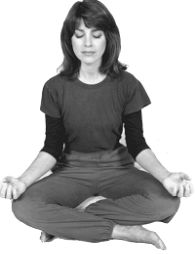
Working with the correct posture and body scan techniques
Understanding the principles of meditation
Short relaxation exercises
The theory of mindfulness
Positive visualisation
Working with music and sound
Muscle release exercises
Awakening the senses
Meditation for emotional health
Practical stress release in daily life
Setting one’s own personal meditation plan and goals
Gaining an understanding of the physiology of stress and relaxation
What are the benefits of regular meditation?
Meditation and mindfulness are very safe practices that promote a deep state of relaxation which is very beneficial to the body and mind. Hundreds of clinical tests in recent years have demonstrated that there are some physical conditions that may show improvement with regular meditation/mindfulness:
- High blood pressure
- Cardiovascular disease
- Asthma
- Migraines and Headaches
- Backache and Muscular Tension
- Gastro-intestinal problems
- PMS
- Insomnia and fatigue
- Pain relief
Emotional and Mental Benefits include: - Relief from anxiety
- Inner calm and balance
- Greater energy
- Better focus and concentration
- An ability to stand back and be more objective
- Greater creativity
Tutor profile: Karen Young
For many years I worked within a corporate environment, rising to the level of managing director. I fully understand the stress of a demanding lifestyle, whilst having a busy home life as a parent.
Some years ago, I decided to change work direction, to devote my time to a more holistic way of life. I work primarily from home and teach meditation and stress management from beginner to advanced level and from individuals to groups. I tutor workshops at the Earthlife Holistic Centre in Kew. In the past, I have assisted as an adviser for a number of national magazines; with corporate groups leading workshops; with local G.Ps at their surgery; with local schools at secondary level.
For further details, please click here

Starter Exercises to prepare you for meditation
Meditation is all about living in the present moment, in a focused, concentrated and mindful way; the practise of meditation and mindfulness can quite quickly bring significant changes to how we feel emotionally and physically. However for many people, getting started can seem daunting particularly as most feel that they have busy, ever chattering brains that are impossible to switch off. The following short exercises can be incorporated into your everyday life and are designed to get you started in a comfortable way, boosting your confidence and providing you with insights into how you breathe and how to recognise your thoughts. Later when you are meditating on a regular basis, many of these short exercises can be used as the starting block for meditation and mindfulness when you have an opportunity during the day to seize the moment and “slow focus” things down. Before you start these exercises, make sure that you are in a comfortable position with your spine straight and supported by the lower half of your body.
Sighing
When you are tense and anxious, the shoulders, upper chest and neck muscles are usually tight. Fast and shallow breathing often accompanies this physical tension. A sigh will often break the rhythm of this tight breathing and therefore release some physical tension; in fact it is the fastest way to initiate the relaxation process. For this exercise, breath in deeply, feeling the expansion of your lower ribs and diaphragm as well as your upper chest. As you breath out completely, release a sigh softly through your lips (it doesn’t have to be exaggerated in the way that you would let out a sigh of frustration!). Feel a natural pause as your abdomen softens even more. Hold the pause until you are ready to breathe in again. Repeat this two more times. This exercise can be carried out any place, at any time, whether standing up, sitting down or with your eyes open or closed. As each out breath gets deeper than the last, you will send messages to the brain that you are feeling relaxed and calm.
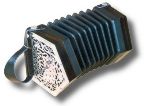
The Concertina
We know instinctively that the path to being more relaxed is to breath more deeply. However, so many of us have fallen into the habit of fast, shallow breathing that it is difficult for us to change. At first, the practice of breathing deep into the diaphragm can leave us feeling panicky and as though we are fighting for breath. It helps to stop thinking of breathing in and out in a vertical way; instead visualize each breath as expanding our belly horizontally (just like filling a concertina opening out with air) whilst each out- breath contracts our belly like the concertina expelling air and closing again. By concentrating on this visual image, we naturally fall into deeper, more rhythmic breathing without worrying about it.

Naming your thoughts
All too often when we start learning to meditate, one of the problems we experience is an inability to recognise that we are thinking until we are deep into the process. This is hardly surprising as for most of our lives we have fallen into the habit of letting our thoughts dictate and set the pace. Meditation is all about letting go of our thoughts in order to focus on a given subject whilst being completely in the present.
This exercise is therefore a useful one for us to start recognising, naming and letting thoughts go. For the next 5 minutes sit quietly and wait for your thoughts to occur; as they do so put a name or category to them (without judgement) – it could be as simple as “work”, “past “, “future”, “food” and then gently let them go and wait for the next thought . It is often illuminating and empowering to recognise your thoughts in this way.
Breath and Affirmation work
For this exercise simply focus on taking in a nice, easy breath and then releasing the out-breath, through your mouth, with a slight sigh. This naturally elongates the breath and lets go of physical tensions. Do this for about 10 times and then say very deliberately “let go” on each exhalation again for about another 10 times. Follow this up with saying “Relax” on each out-breath for a few minutes followed by the affirmation “Calm” on each exhalation. You should complete this exercise feeling balanced and focused.
At the end of all these exercises bring your attention back to your body, your connection with the ground, your surroundings. When you are ready, have a stretch, open your eyes and slowly take in the light. Complete the grounding process by having a drink of water. Take time to see if there is a difference in how you feel.

The Body Scan
Systematically focus on each muscle area of your body, starting with your scalp and continuing down your face to your forehead, temples, eyes, jaw, mouth. Continue through to your neck and shoulders, upper, middle and lower back and now through your arms to your hands. Extend your focus through your chest, abdomen, pelvic area, thighs, knees, calves and feet. If you feel tension at any point during your scan take an easy, slow breath in and then as your breathe out visualise the muscles in the particular area relaxing and releasing tension. On places of significant tension you may have to carry out the breathing and visualisation technique 2 or 3 times. This is also a wonderful exercise for listening to your body, since we all too often ignore it.

Observing the breath
Frequently we have very little awareness of our breath; we have no idea whether we are breathing in a shallow, deep, fast, slow, relaxed or anxious way. We ignore the fact that our breathing changes in different situations and that it provides us with important messages about our emotions. This exercise is the first step to “mindfulness”, an awareness of yourself within the present moment. Sit quietly and comfortably and just observe your breath. Are you breathing through your mouth or your nose? Are you breathing quickly or slowly? Is there a natural pause between each breath or are you snatching the next in-breath? Does your breathing seem to stop around the upper chest or go deep into your diaphragm? As you sit and observe objectively and without judgement you will almost naturally fall into a slower, deeper breath at times (but it may also return to shallower breathing for a while - don’t worry about that as forcing your breath into a pattern is not what this exercise is about). You may also start enjoying the gentle movement of your body as you breathe in and out. Carry out this exercise for about 5 minutes.

Awakening the senses
The quickest way to relaxation is to be in the present. The easiest way to be in the present is by focusing on your senses: sight, sound, smell, taste or touch. Research has shown that most adults spend about 55 minutes in every hour thinking about the past or the future; whilst they are doing this, they are quite clearly not in the present or using their senses to the full. Excessive thinking is the fuel that powers the body’s stress response. Ironically, because we do it so little, being in the present is the most relaxing place for us to be. One of the easiest ways for us to stay in the present is by using our senses to the full – sensing and thinking are opposite functions; one induces calm, the other anxiety.
I would like you to consider how often you use your senses to the full. Do you eat meals fully absorbed by the colour of the food, the aroma, the taste, the texture, the sounds? When walking do you fill your awareness with all that is around you?- the colours of a tree in full autumnal glory, the arch of a cat as it gracefully jumps onto that garden wall, the bloom of a late summer rose in the front garden you pass by. I suspect that the answer is “no” and yet this is the route to greater happiness. Good memories are filled with sensory awareness; the smell of freshly cut grass in the meadow you used to play in as a child; the taste of just picked strawberries, warmed by the sun; the feel of the soft sand under your feet. To enhance your sense of well-being, try to consciously taste, smell, see, hear and touch more every day. Learn to increase those small moments of sensory sensations. Put your full focus into this, keeping thoughts and distractions in the background.
You can invent so many five minute sensory exercises of your own. Here are just a few of my ideas.

The Sound of Silence
Carry out this 5 minute exercise in the same way as for any other meditation or mindfulness exercise. Choose a comfortable posture; scan your body and adjust any obvious tensions; follow your breath to get to a position of focus and stillness. Now take your point of focus as “listening” and observe all the sounds you notice, without judgement. Be prepared to name that sound and then let it go. You will hear external noises- the tick of a clock, the sound of a pet, rain falling into puddles, noises in the street- and you will also get to deeper levels when you can hear the sounds of your body, internal sounds. Don’t force yourself to hear sounds, just let them come to you naturally whilst you sit quietly. This exercise is a great way to build up your powers of observation and your focus.
Eating a piece of chocolate
Tasting a piece of dark chocolate (the highest % of cocoa that you can find) can be an intensely rewarding experience! Take at least 5 minutes over this exercise. Start by closing your eyes and just smelling this small square of chocolate; be aware of sensations, even colour imagery. When you are ready, pop the chocolate in your mouth and let it slowly dissolve – try to avoid chewing. Be aware of the texture, the taste on the tip and back of your tongue, on the roof of your mouth and when you swallow. Even when you have finished this piece of chocolate, focus on the aftertaste in your mouth.
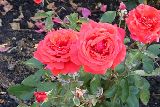
Aroma
Put a drop of your favourite essential oil onto a tissue. Close your eyes and focus on observing your breath for a moment or two, to calm and still your mind. When thoughts crowd in, gently let them drift away. When you are ready, bring the tissue to your nose and inhale naturally and spontaneously 4 or 5 times. Let the aroma fill your nose and travel up to the limbic system in your brain. Be open to getting images or colours as you do this. Take the tissue away from your nose and carry out another minute or so of observing your breath, then repeat the process.